

A powerful real estate CRM is no longer just a tool; it’s the backbone of a successful real estate business in 2025. In today’s dynamic market, leveraging technology to efficiently manage leads, streamline operations, and ultimately close more deals is paramount. If you’re looking to scale your agency, investing in the right CRM is the smartest move you can make.
Table of Contents
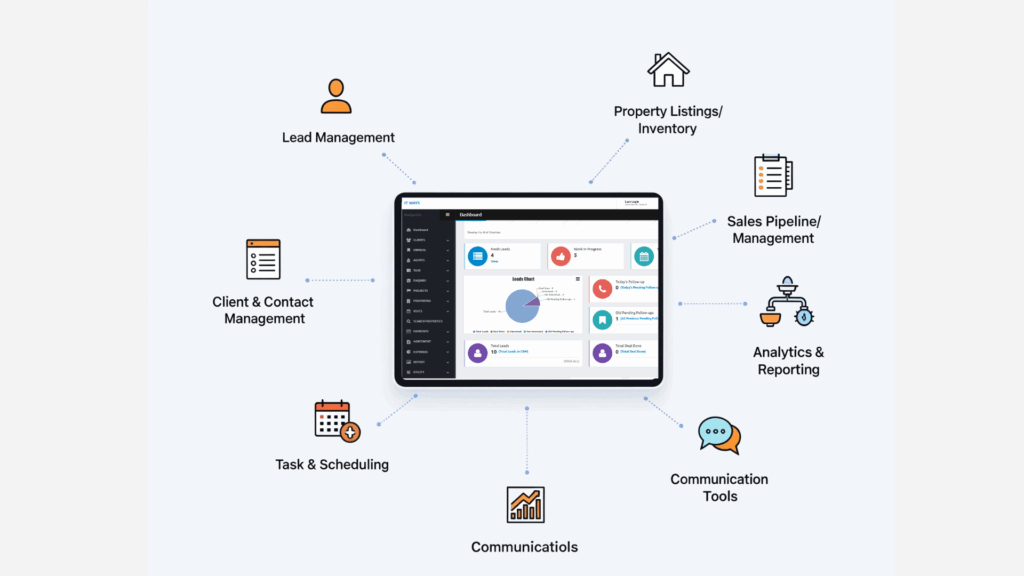
Here are the top 10 real estate CRM features every business needs to thrive in 2025:
1. Advanced Lead Management & Capture
In the competitive real estate market, leads are gold. Your real estate CRM in 2025 must offer sophisticated lead capture from diverse sources – websites, social media, property portals, live chat, and even offline interactions. Crucially, it needs intelligent lead scoring and automated distribution to ensure the hottest leads land with the right agents, ready for immediate follow-up. This minimizes leakage and maximizes conversion potential.
2. Comprehensive Contact & Client Management
Beyond basic contact details, a 2025 real estate CRM should provide a 360-degree view of every client. This includes their preferences, past interactions, viewing history, budget, preferred locations, and even family details. A centralized database ensures all team members have access to the most current information, fostering personalized communication and stronger client relationships.
3. Intuitive Sales Pipeline Management
Visualize your entire sales process with a clear, customizable sales pipeline. This feature allows agents to track leads through every stage – from initial inquiry to closing. Drag-and-drop functionality, automated status updates, and real-time visibility into deal values and probabilities empower agents to prioritize efforts and forecast sales with greater accuracy.
4. Smart Automation & Workflow Capabilities
Time is money in real estate. Automate repetitive tasks like lead assignments, follow-up reminders, email sequences, and even scheduling property showings. This frees up agents to focus on high-value activities like client interactions and negotiations, significantly boosting productivity and ensuring no opportunity slips through the cracks.
5. Integrated Marketing Automation
From nurturing prospects to staying in touch with past clients, marketing is crucial. Your real estate CRM should enable automated email drip campaigns, SMS messages, and even targeted social media outreach. Look for features that allow for segmentation of your audience to deliver highly personalized content, keeping your brand top-of-mind.
6. Centralized Document Management
Real estate transactions involve a mountain of paperwork. A 2025 CRM must offer secure, centralized document storage for contracts, agreements, property details, and other critical files. Integration with e-signature tools like DocuSign is essential for seamless, paperless transactions, enhancing efficiency and compliance.
7. MLS Integration & Property Database
For specific real estate needs, seamless integration with Multiple Listing Services (MLS) is non-negotiable. This allows agents to access real-time listing data directly within their real estate CRM, link properties to client profiles, track property statuses, and quickly match properties to buyer preferences. A robust internal property database is also key for managing your own listings and inventory.
8. Mobile Accessibility
Real estate professionals are always on the go. A dedicated mobile app or a highly mobile-responsive CRM is critical. Agents need to access client information, update lead statuses, schedule appointments, and respond to inquiries from anywhere, at any time, ensuring they never miss a beat.
9. Robust Reporting & Analytics
Data-driven decisions are the bedrock of growth. A top-tier real estate CRM will offer customizable dashboards and comprehensive reports that provide insights into lead conversion rates, agent performance, marketing campaign effectiveness, and market trends. These analytics help identify areas for improvement and inform strategic business decisions.
10. Seamless Integrations & API
Your CRM shouldn’t operate in a silo. In 2025, look for a CRM that offers extensive integrations with other essential tools in your tech stack, such as accounting software, communication platforms (WhatsApp, calling systems), virtual tour platforms, and any other specialized real estate applications you utilize. An open API allows for even greater customization and connectivity.
By investing in a real estate CRM that boasts these essential features, your business will be well-equipped to manage leads effectively, streamline operations, build stronger client relationships, and ultimately drive significant growth and sales in 2025.